
Salem City Directory Runs and Shelves
Salem’s historical directory trail is regional rather than a single stand-alone run. The Virginia Room’s house-research guide confirms that Salem appears in Roanoke city directories beginning in 1923, while the broader Roanoke collection reaches from 1888 to the present. It also identifies Roanoke and Salem phone books from 1916 through 2008. The exact annual Salem coverage is not published online, so check the title page and city coverage of each volume before treating a missing entry as meaningful.
| Collection | Documented period | Where held | Access route |
|---|---|---|---|
| Roanoke city directories with Salem coverage | Salem included from 1923; regional run 1888–present | Virginia Room, Roanoke Public Libraries | Verify the volume locally |
| Roanoke and Salem phone books | 1916–2008 | Virginia Room | Non-circulating research collection |
| Hill Directory Company catalog item | 1923 | Google Books, original from University of Virginia | Bibliographic page; no current full view |
| Hill’s Salem Classified Business Directory | 1928 | Roanoke Public Library citation in the DHR nomination | Ask for local catalog or archive access |
| Salem Times Register microfilm | 1866–1868, 1909, and 1934–present with gaps | Virginia Room | Date-by-date microfilm research |
The Salem Public Library research page points to local-history tools, including Digital Sanborn Maps, HeritageHub and news resources. Those services can help test a directory lead, but none turns an old printed entry into proof of present occupancy.
The library’s research-resources page is the source for this Salem city directory research view.
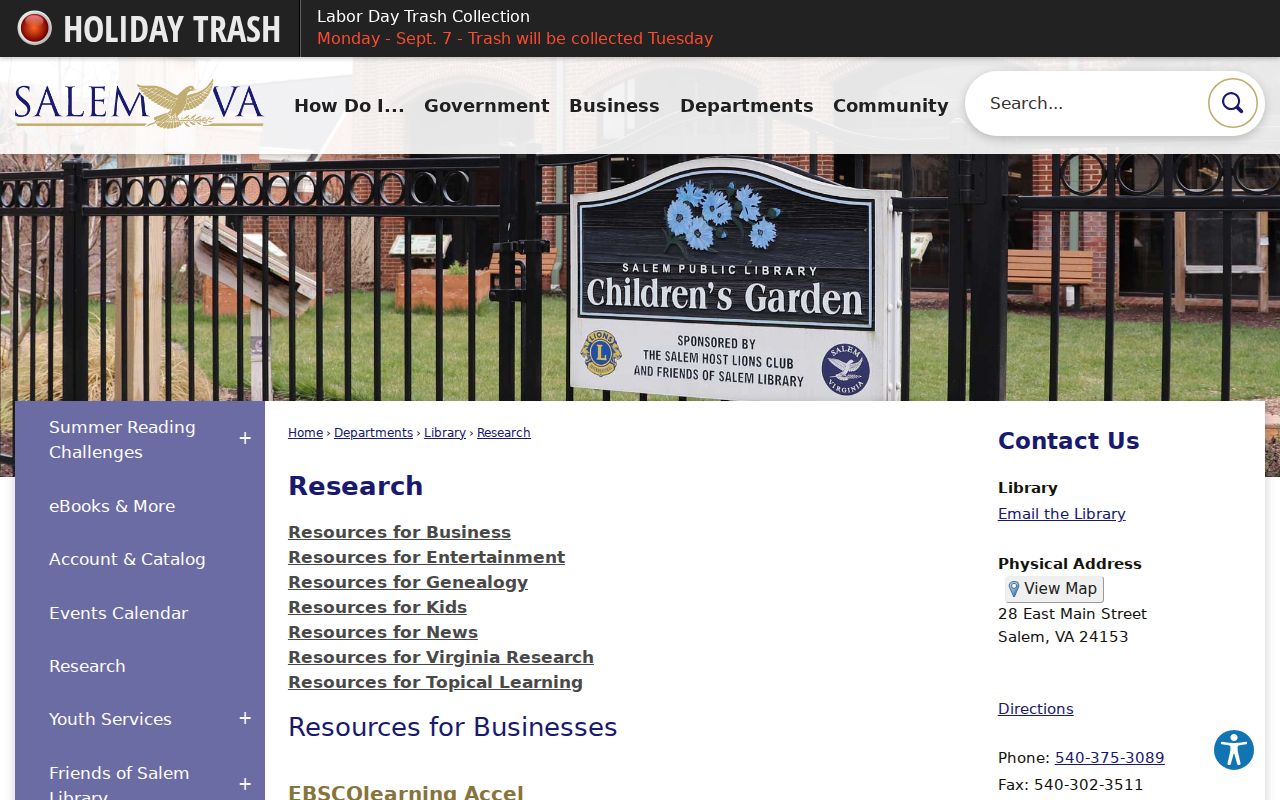
Use the library route to combine a directory year with a newspaper, map or yearbook check while keeping each source’s date separate.
Salem City Directories Begin in 1923
The Salem city directory record begins with a regional title, not a claim that every earlier Roanoke volume covers Salem. The Virginia Room guide confirms Salem’s inclusion from 1923. The digitized catalog title is Roanoke, Salem and Vinton (Roanoke County, Va.) City Directory, published by Hill Directory Company in 1923. Its title makes the shared geography plain and is an important cue for a search that uses both Salem and Roanoke County terms.
Google Books’ 1923 directory record identifies Hill Directory Company and University of Virginia provenance, though the catalog page reports no current full view.
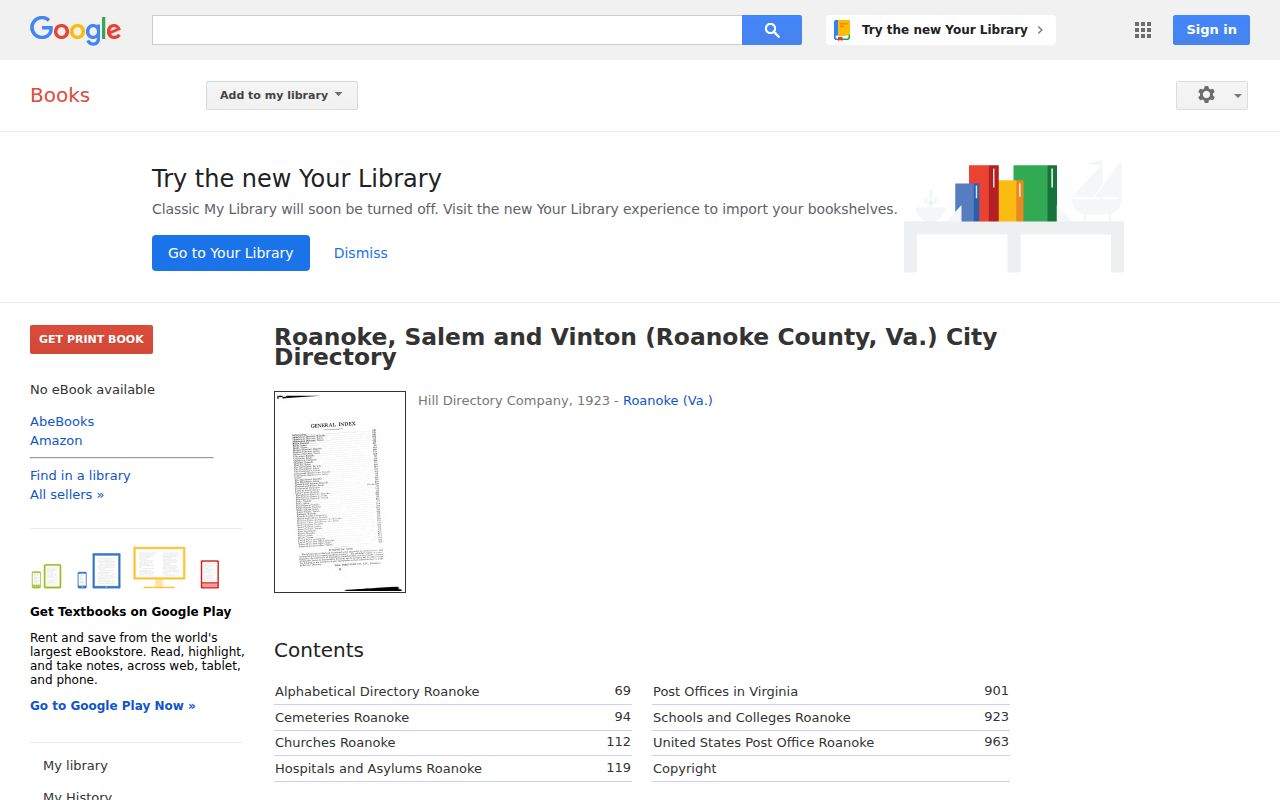
The catalog can establish publication identity and broad scope. Page-level Salem entries still need confirmation in a local volume or scan.
Reading a Salem City Directory Entry
A city directory is best read as a dated publication record. Local guidance says older Roanoke directories can identify a head of household, address, occupation and spouse, with address cross-references. The research did not expose three complete public-view Salem pages, so do not invent a person’s entry or assume every abbreviation means the same thing across volumes. Photograph or transcribe the title page, year, page number and abbreviation key before extracting a name.
| Printed name | Copy spelling, initials and punctuation exactly, then note a normalized search form separately. |
|---|---|
| Street address | Capture the number and street as printed; it may use an older naming or numbering convention. |
| Occupation or business | Record the stated role or business link without treating it as a current fact. |
| Spouse or cross-reference | Preserve the notation as printed. It can be a useful family-history lead, not independent proof. |
| Year and page | Keep the directory year, page and section so another researcher can find the same line. |
- Alphabetical section
- The surname-order portion of a directory, useful when a name is already known.
- Street section
- An address-order portion, sometimes called a criss-cross arrangement, used to check a historic street before assuming a household match.
- Cross-reference
- A printed pointer from one form of an entry to another. Follow it, but retain both forms in the research note.
- Abbreviation key
- The volume’s own explanation of shortened terms. Its meaning should be taken from that edition, not guessed from a later book.
Search Salem City Directories by Address
When a historic house or block is the question, use the address first and the name second. Start with the address from a deed or current parcel record, then inspect the relevant year’s street section. Next, search the alphabetical section for the surname and spelling variants. The sequence avoids mistaking a similarly named person, a business address or an adjacent number for the target household.
- Write the historic address exactly as it appears in the deed, map or directory source.
- Check the street or address section for the year in question and capture the printed number.
- Find the surname in the alphabetical section, including initials and spelling variants.
- Compare the prior and following available volumes for a move, a changed occupation or a new cross-reference.
- Use a dated newspaper, census or map source to test the result rather than merging similar names.
For a fuller Salem historical-shelf search, keep the Salem title, Salem holder, access route, and Salem volume year together, while address continuity belongs in the deed and parcel trail. A Salem archival search works best when those details travel with the printed entry.
Salem City Directories at Local Archives
Salem’s human-use research network extends beyond the directory shelf. The Salem Public Library links local history, Andrew Lewis yearbooks, cemetery GIS and regional referrals. The Virginia Room holds city directories, phone books and Salem Times Register microfilm. Salem Museum’s Logan Research Library adds biographical files, family histories, yearbooks, newspapers, photographs, maps and topical files. These are different collections, so a catalog hit in one does not guarantee the item is held by another.
The Logan Research Library is open Fridays by appointment from 10 a.m. to 2 p.m.; fee-based research requests are available and the museum asks visitors to call before assuming material is open or digitized.
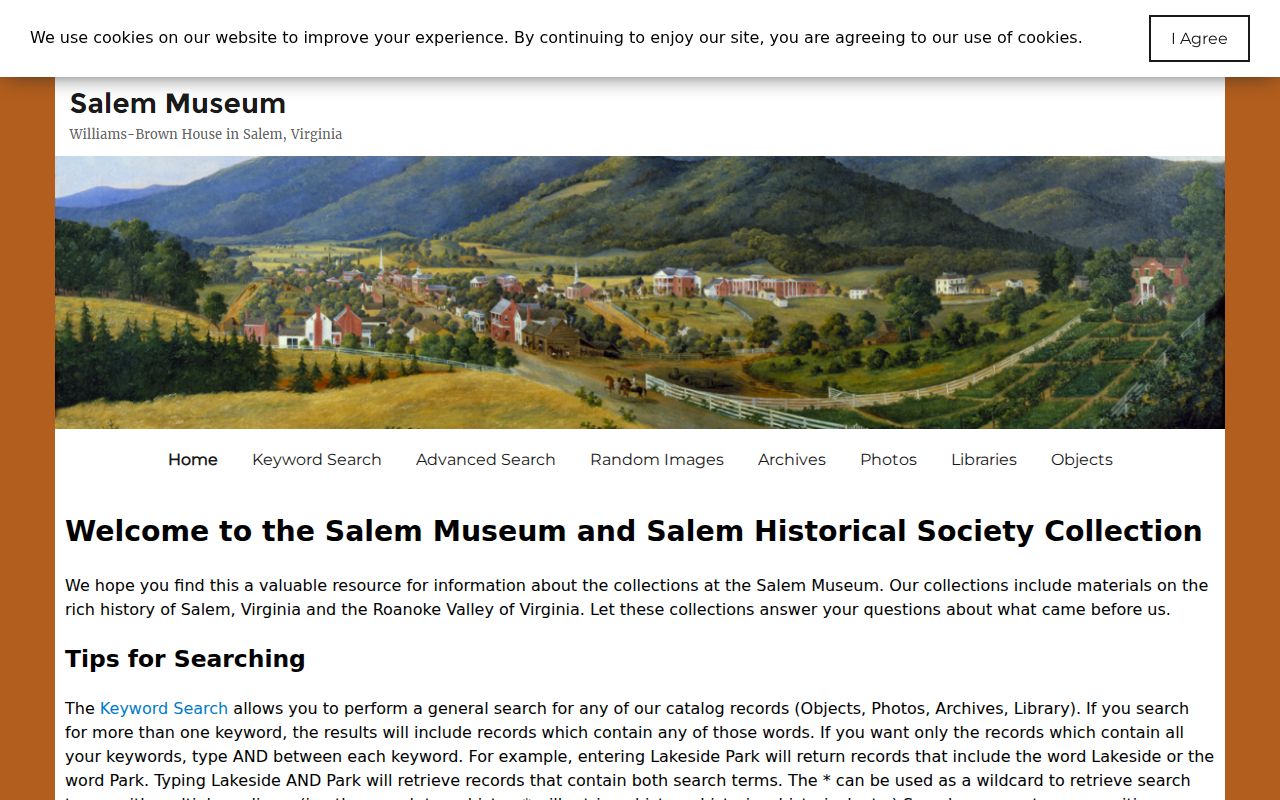
Biographical and topical files can corroborate a dated directory appearance, but they remain archival evidence rather than a current address record.
The Salem City Directory 1928 Lead
The Downtown Salem Historic District nomination cites a distinct Hill’s Salem Classified Business Directory 1928, held by the Roanoke Public Library. That is a different lead from the regional Roanoke directory run. It may help locate a downtown merchant, proprietor, office or business address, but the cited bibliography does not make its full pages publicly available. Ask the Virginia Room or Salem Museum whether it is cataloged under “Salem City Directory,” “Hill’s,” or a broader Roanoke Valley title.
This separate 1928 citation matters because it preserves Salem-specific commercial geography without turning a business listing into a household claim.
Salem City Directories Beside Historic Maps
A directory shows that an address was printed in a particular year. A Sanborn map can test whether a structure, street orientation or land use fits that date. The Virginia Room house guide lists print years of 1898, 1903, 1907, 1919 and 1955 for Roanoke and Salem-area house research, and Salem Public Library provides Digital Sanborn Maps for Virginia. Maps show structures and uses, not a full roster of residents.
For a downtown address, compare the printed street with a Sanborn year and the city’s historic-district material. If the number, lot or building changed, record the uncertainty instead of forcing a match.
Trace Families Through Salem City Directories
Directory volumes can create a year-by-year trail between federal census dates. The National Archives’ 72-year rule makes the 1950 census the most recent public population schedule, with earlier schedules available for comparison. A census household may include people omitted from a directory, while a directory can show a boarder or business connection absent from the household schedule. Compare street, locality, age, occupation and family names, and preserve the census enumeration date.
- Locate the earliest available directory appearance and save its year and page.
- Follow later and earlier volumes, noting any address, surname or occupation change.
- Use the street section to check whether the printed address is consistent with the name entry.
- Pair the result with the appropriate public census schedule and retain the enumeration date.
- Use dated newspapers, cemetery records or archival files only as a separate corroborating source.
A disappearance may reflect a move, death, changed name, incomplete coverage or a volume gap. It is a reason to look for another dated source, not a conclusion by itself.
Salem City Directory Gaps Matter
No confirmed source publishes every annual Salem volume, the last printed Salem volume, or three fully accessible page-level Salem entries. The regional collection is strong, but its limits should remain visible in a research note. Record the repository, title, year, page, section, jurisdiction label and access date. For older material, search both Salem City and Roanoke County catalog terms because the locality label can change across the same address history.
Before Salem’s documented 1923 inclusion, a search may require the Roanoke County route rather than a presumed Salem directory. The Library of Virginia’s county guide can lead to older deeds, land-tax books, marriage records, wills and chancery causes, while the Virginia Room and Salem Museum may supply regional newspapers, maps or biography files. Those sources answer different questions. A careful request names the spelling variants, street, approximate date, record type and the original locality label, then records a negative search alongside the volumes or indexes actually checked.
Salem Times Register microfilm also has documented gaps. When a newspaper date is unavailable, preserve that gap and check another dated collection rather than treating silence as proof that nothing occurred.
Note: An absent entry can reflect a gap in the available volume or an indexing difference, not proof that a person was absent from Salem.