
Salem Previous Residents by Record Era
Previous residents leave different kinds of evidence at different times. For a current Salem address, the city’s Real Estate Department, DataScout property route and GIS establish the parcel, map context and deed reference. The deed trail then moves through Salem Circuit Court or, for older material, Roanoke County indexes at the Library of Virginia. Directories, phone books, maps and newspapers can add a dated household record, but none should be treated as a universal occupancy list.
| Source | Documented period | Where held | What it can show |
|---|---|---|---|
| Current Salem parcel, land book and GIS | Current city records | Salem Real Estate Department and GIS | Parcel context, owner or mailing field, legal description and deed reference |
| Salem Circuit Court land records | Salem independent-city record path after city transition | Salem Clerk at 2 E Calhoun Street; SRA where enabled | Recorded instruments, parties and legal descriptions |
| Roanoke County deeds for Salem history | County formed 1838; LVA runs reach the early twentieth century | Library of Virginia and county clerk | Grantor, grantee, book, page and historic Salem tract trail |
| Salem regional directories and phone books | Salem directories from 1923; phone books 1916–2008 | Virginia Room | Printed Salem address, name, occupation or cross-reference |
| Federal schedules for Salem context | Public through 1950 under the 72-year rule | NARA and library research tools | Dated Salem household context |
| Sanborn and local newspapers | Maps: 1898, 1903, 1907, 1919, 1955; newspaper runs vary | Virginia Room and Salem Library tools | Structure, street or event context |
Start with the newest reliable Salem deed reference, then walk backward. A Salem name-first approach is weaker when street numbers, spellings or jurisdiction labels changed across the address history.
Start Salem Previous Residents With Deeds
The City of Salem’s Property Search describes DataScout access to ownership, characteristics, assessed values, mapping and sales statistics. If the externally rendered interface does not expose a needed field, use the Salem assessor as the fallback at Salem City Hall, 114 N Broad Street, 540-375-3058. The static Salem land book is especially useful because it displays an owner and address field, map or zone and property-use information, legal description, values and a deed reference. An owner or mailing address must not be relabeled as a current resident.
The Virginia Secure Remote Access entry page shows the clerk-selected land-record model that may provide index or image access. The public research did not confirm Salem’s exact SRA coverage, fields or fees, so confirm availability with the Salem Circuit Court Clerk.
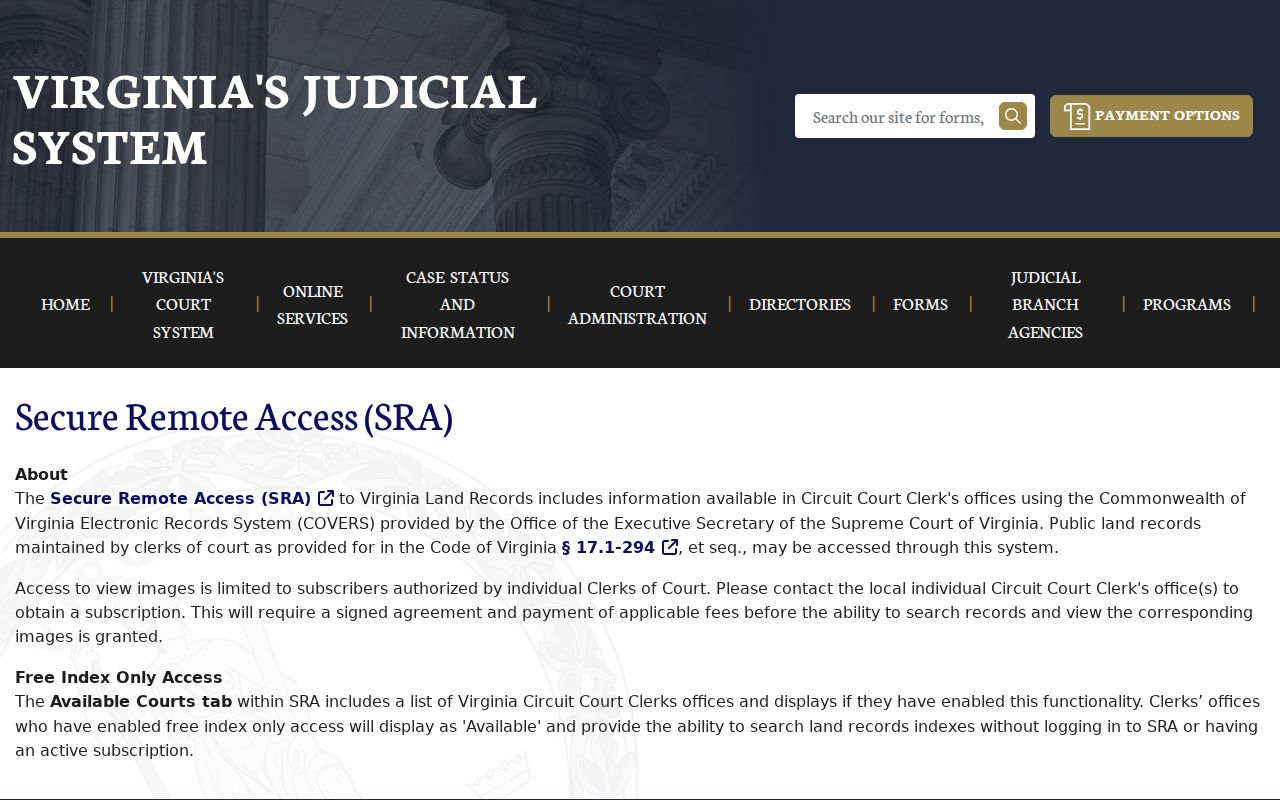
Use the service as a discovery route, then rely on the clerk for the exact index, image and copy options for a Salem instrument.
Trace Salem Previous Residents Through Deeds
A Salem deed chain follows ownership, not every person who lived at a Salem address. Begin with the parcel’s current legal description and deed reference. Retrieve the recorded instrument when the clerk or index permits it, then record the grantor, grantee, date, instrument or book and page, legal description and any referenced plat. Search the prior transfer with the legal description in view. A Salem street address alone can change or be absent from an older deed.
- Normalize the current address from Salem GIS or the assessor and retain alternate abbreviations, units and tax-map information.
- Open the land-book or parcel record and copy its legal description, effective date and deed reference.
- Ask Salem Circuit Court or the applicable index for the referenced instrument and record its parties, date and plat references.
- Use the earlier buyer and the same legal description to locate the next prior transfer, repeating the sequence without dropping jurisdiction labels.
- When the trail reaches older county material, move to the Roanoke County indexes and microfilm rather than assuming the city index is complete.
- Grantor
- The party transferring an interest in the recorded instrument.
- Grantee
- The party receiving the interest described by the instrument.
- Chain of title
- The dated sequence of recorded transfers for the same tract or lot.
- Legal description
- The tract, lot, subdivision or boundary language that identifies property more reliably than an old street number.
Salem Previous Residents Cross Jurisdictions
Salem is an independent city, but the pre-city land trail is not erased by today’s address. Salem became an independent city at midnight on December 31, 1967, with its present charter in 1968. South Salem was annexed in 1953 and an eastern tract in 1960. A source for a tract now in Salem may therefore say Roanoke County, even when the street appears familiar. Preserve the record’s original locality instead of silently converting it.
This geography has a useful practical wrinkle. Roanoke County Circuit Court is physically at 305 E Main Street in Salem, while Salem Circuit Court is a separate independent-city court at 2 E Calhoun Street. The building location does not decide the jurisdiction. The event date, record series and legal description do.
Roanoke County Deeds for Salem History
The Library of Virginia’s Roanoke County microfilm guide is the key route once a Salem address reaches its historic county record. It lists deed books A through Z and later numbered books, general grantor and grantee indexes A–C for 1838–1923, plus land-tax books, marriage material, wills, inventories and chancery causes. The LVA guide is a record-run index, not evidence that all pages are online or that a modern city address appeared in the same form.
The LVA Roanoke County records guide is the source for the historic deed-book and index route.
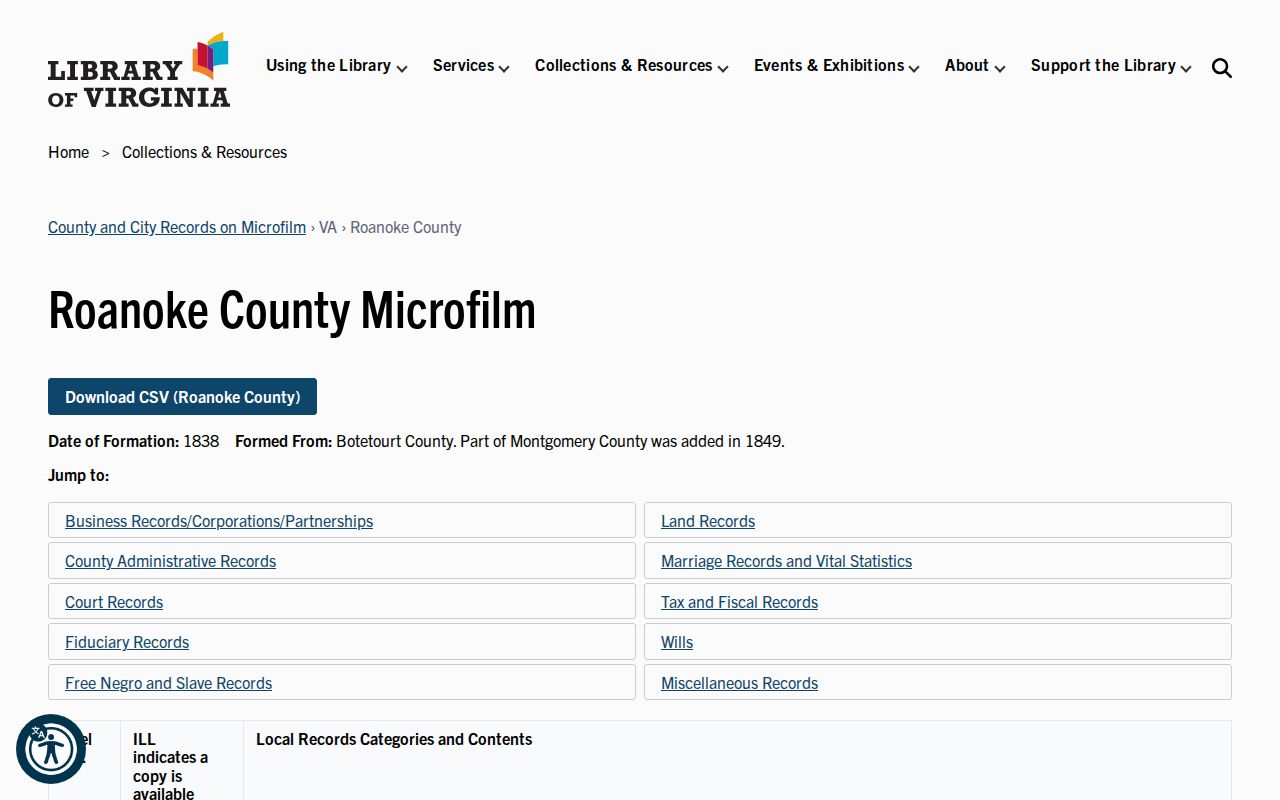
Use the county name exactly as the guide uses it when requesting older land or court material tied to a present Salem address.
Salem Previous Residents and Plat Names
Salem subdivision plats can bridge a changing address and the Salem deed chain. Salem-recorded plats begin with city incorporation in 1968, while the city also provides a Roanoke County plat index for older material. That index includes names such as Burwells Survey, Susan Shanks Addition, W.H. Dennis Heirs, Glenmore, Kaseys Addition and Salem Improvement Co. A Salem plat name, lot number or survey clue makes an older transfer search more precise than a street number alone.
Salem’s maps, monuments and benchmarks page is the source for the city plat route and links to the older county plat materials.
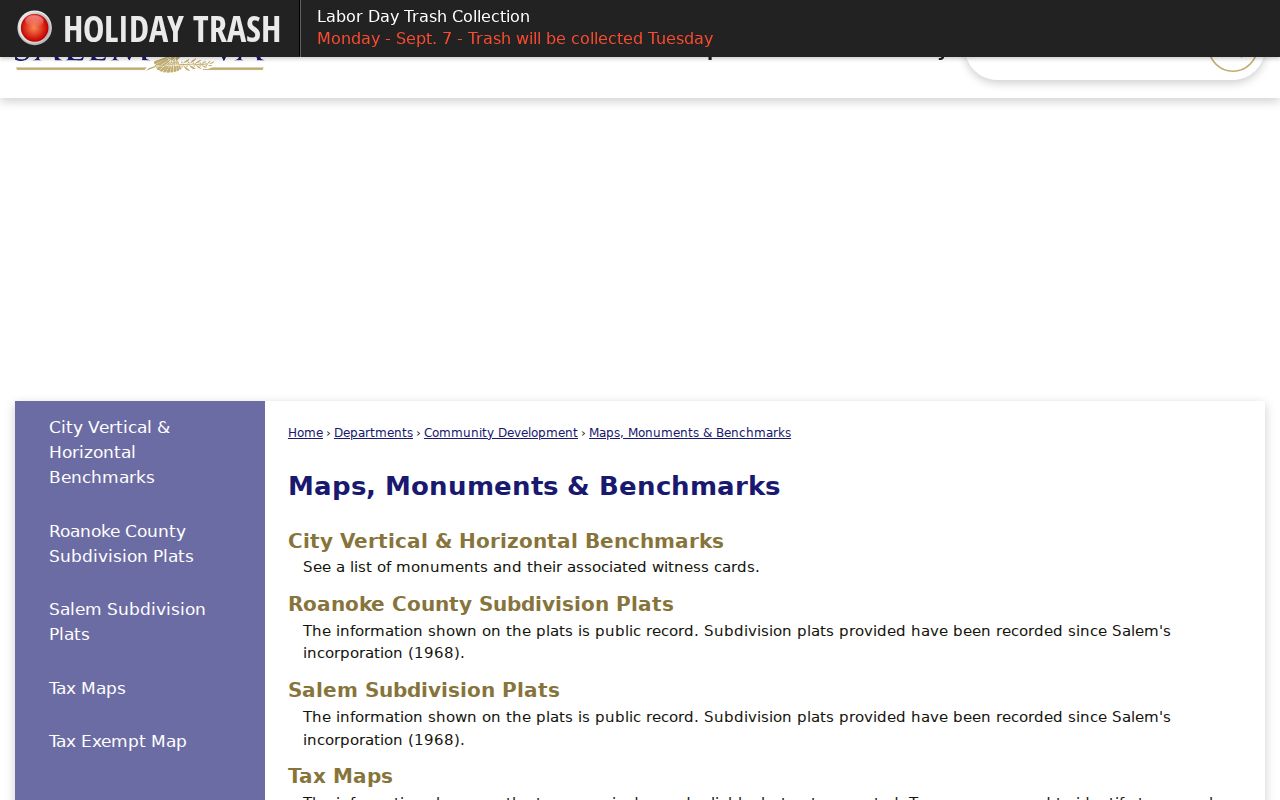
Plats explain lot creation and survey context. They do not by themselves identify every prior household associated with the lot.
Salem Previous Residents in Directories
Salem ownership is only one layer of a Salem house history. Salem appears in the regional directory collection from 1923, and the Virginia Room house guide lists Roanoke and Salem phone books from 1916–2008. Check the Salem street section for the address first, then the alphabetical section for spelling variants. Capture the printed street, number, occupation, spouse notation, cross-reference, business affiliation, page and year. A directory may list a head of household while omitting other adults and children.
Pair a directory year with the closest public federal census schedule. The 1950 census is currently the most recent public population schedule under the 72-year rule. Compare the street, locality, age, occupation and family names, but preserve the enumeration date. The collections and shelf routes are detailed in the Salem Directory Book.
- Find the address in a dated directory street section.
- Check the printed surname entry and nearby available years.
- Compare the address with the matching public census era without assuming a directory equals a full household list.
- Use a dated obituary, cemetery entry or probate record only to corroborate the specific question at hand.
Salem Previous Residents in Maps and News
Sanborn maps are a building check, not a resident list. The Virginia Room guide identifies print years of 1898, 1903, 1907, 1919 and 1955, and Salem Public Library offers Digital Sanborn Maps for Virginia. Compare a map footprint, street orientation and use label with the directory year and legal description. A demolished building, renumbered street or changed lot can break an apparently simple match.
For event evidence, Salem Times Register microfilm is a local priority. The Virginia Room brochure lists runs for 1866–1868, 1909 and 1934–present with gaps. Newspaper notices can date a move, property event, marriage, obituary, civic role or business change, but record the issue date and page rather than relying on a search-result snippet.
Limits on Salem Previous Residents Searches
Use past-resident research for family history, estate or heir questions, a house history or ordinary neighborhood curiosity. Keep roles exact: a deed shows a grantor or grantee, a land book may show an owner and mailing address, and a directory shows a dated printed entry. Do not reconstruct a protected physical address or combine records on a name alone. The Virginia Address Confidentiality Program and protected voter rules can substitute mailing information for a physical address.
Lawful personal use. Virginia Code § 18.2-60.3 addresses stalking. Do not use a previous-resident trail to harass, intimidate, follow or harm any person.
Virginia Freedom of Information Act requests do not override a sealed court file, vital-record eligibility rule, Driver’s Privacy Protection Act limit, protected voter record or Address Confidentiality Program protection. For a same-name result, use at least two independent anchors such as a dated address plus a legal description, or a name plus middle initial and institution. A common name needs a third anchor. Never place a date of birth, identification number or protected location into a house-history note.
When a source does not identify a physical address, keep it that way. A mailing field, courthouse party name, directory listing or cemetery record serves only the exact role shown by its custodian.
Note: A deed-chain gap, missing directory entry or map mismatch should be recorded as uncertainty, not filled with an unsupported household claim.